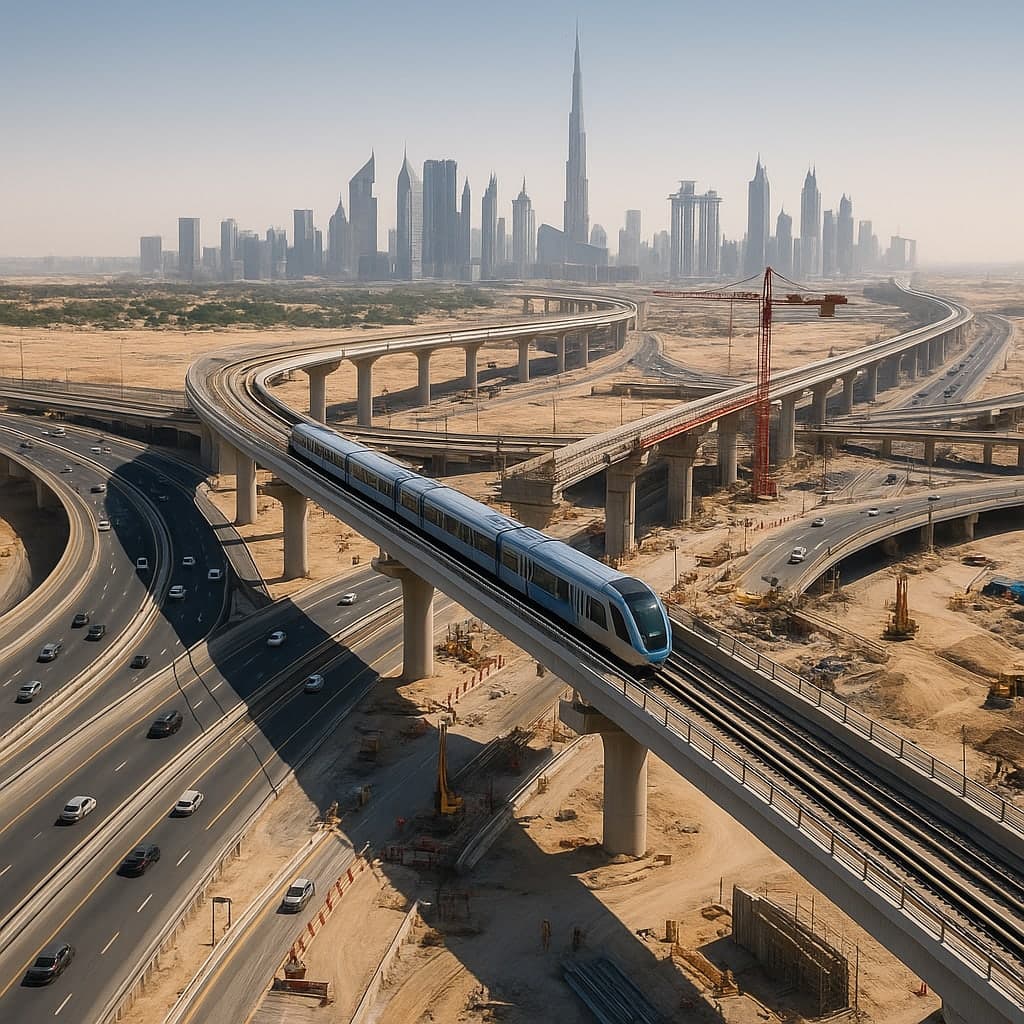
Shaping Dubai’s Commute: Top RTA Projects to Watch in 2025
Dubai is rapidly transforming into a global mobility hub, and the Roads and Transport Authority (RTA) plays a pivotal role in this evolution. The city's future depends on an agile, sustainable, and technologically advanced transportation network. In 2025, several RTA projects are slated to redefine urban commuting, enhance connectivity, and improve commuter convenience across the emirate. Here's a comprehensive look at the top RTA projects in Dubai to watch in 2025.
Major Public Transport Innovations for 2025
Dubai Metro Blue Line: A New Artery of Connectivity
One of the most anticipated developments is the Dubai Metro Blue Line, a 30 km route connecting major residential and business districts. With 14 new stations—half underground—this line will significantly ease the burden on existing Red and Green lines. The Blue Line will provide direct access to:
- Dubai Silicon Oasis
- Mirdif
- Dubai Creek Harbour
- Rashidiya Interchange
Construction has already begun, and the project is expected to be operational by 2025, boosting public transport usage and cutting carbon emissions.
Driverless Metro Trains: Automation at Its Finest
RTA is investing in driverless train technology that enhances safety, punctuality, and energy efficiency. The upgraded rolling stock, primarily for the Expo 2020 legacy network, will feature AI-powered diagnostics, smart surveillance, and real-time operational analytics.
This move aligns with Dubai’s Smart City vision, setting a new global benchmark for autonomous public transportation.
Smart Mobility and AI Integration
Digital Traffic Management System Upgrade
Dubai’s traffic control system will undergo a massive AI-powered upgrade in 2025. Leveraging machine learning algorithms, the system will analyze traffic data from sensors, drones, and IoT cameras to:
- Predict congestion hotspots
- Adjust signal timings dynamically
- Prioritize emergency vehicles and public transport
The new traffic management center in Al Barsha will serve as a nerve center, ensuring smoother, safer, and smarter road operations.
Smart Pedestrian Signals and Crosswalks
Another innovation on the streets of Dubai will be smart pedestrian signals. These adaptive systems, powered by sensors and artificial intelligence, detect pedestrian flow and adjust crossing times accordingly. This improves both pedestrian safety and traffic fluidity, especially in high-density areas such as:
- Downtown Dubai
- Bur Dubai
- Business Bay
By the end of 2025, more than 100 smart pedestrian signals will be operational across key intersections.
Green Mobility Initiatives
Electric and Hydrogen Bus Fleet Expansion
In line with Dubai’s Net Zero 2050 Strategy, RTA plans to expand its eco-friendly bus fleet by integrating:
- 100% electric buses
- Hydrogen fuel cell buses
These buses will operate on high-demand routes, especially in Deira, Jumeirah, and Dubai Marina. Charging infrastructure across depots and public terminals is already under construction.
With zero-emission buses covering over 60% of RTA’s total public transport fleet by the end of 2025, Dubai will lead the region in sustainable transit solutions.
Cycling Superhighways and E-Scooter Corridors
By mid-2025, Dubai will unveil over 300 km of dedicated cycling tracks, including cycling superhighways that connect residential areas to business hubs. These include:
- Al Qudra – Dubai Hills Link
- Downtown Loop
- Palm Jumeirah Eco Track
RTA is also establishing e-scooter corridors with geo-fenced zones to improve safety and reduce clutter. This supports last-mile connectivity while promoting healthy, sustainable travel.
Road Infrastructure Mega Projects
Al Khail Road Expansion and Interchange Upgrades
To address growing traffic volumes, Al Khail Road (E44) is undergoing a major expansion. The project includes:
- Widening to 6 lanes in both directions
- Adding four new interchanges
- Building a new 6-lane bridge over Dubai Creek
Completion is set for Q4 2025, reducing commute times between Business Bay and Al Barsha by up to 40%.
Shindagha Corridor Development
The Shindagha Corridor Project, a multi-phase megaproject stretching over 13 km, continues to transform old Dubai’s traffic dynamics. The Infinity Bridge is now operational, and 2025 will see the opening of:
- Deira Plaza Tunnel
- Port Saeed Interchange Upgrade
These changes will drastically cut congestion, especially in historically dense areas like Deira Corniche and Bur Dubai.
Seamless Multimodal Integration
Dubai Unified Mobility App 2.0
The next-gen version of Dubai’s Unified Mobility App (S’hail) will launch in 2025 with integrated access to:
- Dubai Metro
- RTA buses
- Marine transport
- E-scooters
- Car rentals and taxis
New features include AI-driven route suggestions, multi-ticket wallet, carbon footprint calculator, and real-time congestion maps. The goal is to provide an all-in-one digital platform for every kind of commuter.
Marine Transport Modernization
RTA is also investing in a revamp of marine transport. Plans for 2025 include:
- New electric abras for Dubai Creek
- Hybrid-powered Dubai Ferries
- Smart floating terminals equipped with AI-ticketing kiosks
With these changes, marine transport will become more reliable, sustainable, and seamlessly integrated into the urban transit network.
RTA’s Vision for Autonomous Vehicles
Dubai has set a target that 25% of all transport will be autonomous by 2030, and 2025 will be a critical milestone. The RTA, in collaboration with Cruise (a GM subsidiary), will:
- Launch autonomous taxis in select areas of Downtown
- Create dedicated AV testing zones
- Install smart infrastructure, including AV traffic lights and connected signage
These pilot programs will validate the scalability and safety of AV deployment in a high-density urban setting.
Conclusion: Dubai's Mobility Future is Already Here
Dubai’s 2025 transportation blueprint proves that the city is not just adapting to urban growth—it’s leading global mobility trends. Through a blend of innovation, sustainability, and strategic foresight, the RTA’s upcoming projects will redefine commuting in Dubai.
From cutting-edge metro expansions and AI-driven traffic control to green mobility infrastructure and autonomous vehicle deployment, Dubai is shaping a future where public transport is not only efficient but also eco-conscious and commuter-centric.
As these projects unfold, Dubai will continue to outperform global cities in transportation innovation, setting the gold standard for what smart, sustainable urban mobility looks like.